


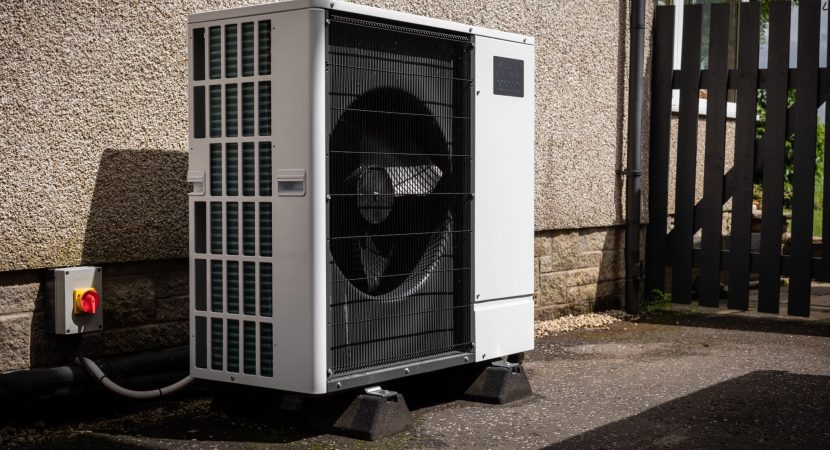
Professional Air Source Heat Pump
The UK’s gas boiler is on borrowed time. As the country moves decisively towards low-carbon heating, air source heat pumps have emerged as the most practical, cost-effective, and widely applicable alternative for the majority of UK homes.
At EZECO, we design and install air source heat pump systems for homes. Every installation is individually designed around your property — your heating requirements, your existing pipework, your hot water demand, and the layout of your home. We do not install generic systems. We install the right system for your specific property, carried out by our own certified engineers to the highest standards of quality and compliance.
An air source heat pump works by extracting heat from the outside air — even when temperatures fall well below zero — and using it to heat your home and hot water. Unlike a gas boiler, it does not burn fuel. It moves heat that already exists in the environment, which is why it can deliver two to four units of heat energy for every one unit of electrical energy it consumes. That ratio — known as the Coefficient of Performance — is what makes heat pumps so significantly more efficient than conventional heating systems.
When combined with a solar panel installation, an air source heat pump represents the most complete and self-sufficient energy solution currently available for a UK residential property. Your solar panels generate the electricity to power the heat pump during daylight hours, further reducing your running costs and your reliance on the grid.
Every heat pump installation we carry out is backed by our 25-year all-inclusive service plan, covering the full system for the entire term — parts, labour, and ongoing performance monitoring included.
What Is an Air Source Heat Pump?
An air source heat pump (ASHP) is a highly efficient heating system that extracts thermal energy from the outside air and transfers it into your home as usable heat. It operates on the same fundamental thermodynamic principle as a refrigerator — but in reverse. Where a refrigerator removes heat from inside a cold box and expels it into your kitchen, a heat pump extracts heat from outside your home and delivers it inside.
The process works as follows: a refrigerant fluid circulates through the outdoor unit, absorbing heat from the external air. The refrigerant is then compressed, which raises its temperature significantly. That heat is transferred via a heat exchanger into your home’s heating and hot water circuit, where it is distributed through your radiators, underfloor heating system, or hot water cylinder. The refrigerant then expands and cools, ready to absorb more heat from outside — and the cycle continues.
Critically, this process works effectively even when outdoor temperatures are as low as -20 degrees Celsius. The air always contains thermal energy that the system can extract and amplify. This is why air source heat pumps are considered a genuinely viable heating solution for the UK climate — including in Scotland and other colder regions of the country.
The Four Stages of the Heat Pump Cycle
Stage 1:
Stage 2:
Stage 3:
Stage 4:
Types of Air Source Heat Pump
There are two primary configurations of air source heat pump available for residential installation in the UK. Our surveyors will recommend the appropriate type based on your property’s layout, your existing heating system, and your hot water requirements.
Air-to-Water Heat Pump
The most common type for UK residential properties. An air-to-water heat pump transfers the heat it extracts from the outside air into your home's wet central heating system — the same radiators and pipework used by your existing boiler. It also heats your hot water cylinder. Best suited for: Properties with existing wet central heating systems Homes with underfloor heating or upgraded radiators Properties replacing a gas or oil boiler
Air-to-Air Heat Pump
An air-to-air heat pump extracts heat from outside and distributes it directly into your rooms via internal fan units — similar to a modern air conditioning system, but with highly efficient heating as its primary function. Air-to-air systems do not heat water, so they are typically used alongside an existing hot water system. Best suited for: Properties without existing wet central heating Commercial or mixed-use spaces requiring zoned climate control Properties also requiring cooling during summer months
Air Source Heat Pump vs Gas Boiler
For most UK homeowners, the decision to install a heat pump involves replacing or supplementing an existing gas boiler. The comparison below sets out the key differences across the factors that matter most: running costs, environmental impact, efficiency, longevity, and total cost of ownership over time.
| Factor | Air Source Heat Pump | Gas Boiler |
|---|---|---|
| Efficiency | 200%–400% (COP 2.0–4.0) | Up to 95% (best case) |
| Carbon emissions | Up to 70% lower | High — burns fossil fuel |
| Fuel source | Electricity (increasingly green grid) | Natural gas (fossil fuel) |
| Heating output | Consistent, low-temperature flow | High-temperature output |
| Cooling capability | Yes — air-to-air systems | No cooling function |
| System lifespan | 20–25 years with proper maintenance | 10–15 years average |
| Noise level | Quiet — comparable to an air conditioning unit | Internal boiler noise |
| Installation footprint | Outdoor unit + indoor components | Wall-mounted, compact |
| Future compatibility | Aligned with UK clean energy policy | Being phased out of new builds |
| Running cost trend | Improving as grid decarbonises | Rising as gas prices increase |
| 25-year support (EZECO) | Full all-inclusive service plan | Standard manufacturer warranty only |
The Benefits of an Air Source Heat Pump
The case for switching from a gas boiler to an air source heat pump has strengthened considerably in recent years, as technology has improved, installation costs have fallen, and the UK’s gas infrastructure has become an increasingly uncertain long-term proposition. Here is what an air source heat pump installation with EZECO delivers for your home.
Significantly Lower Carbon Emissions
An air source heat pump produces up to 70% fewer carbon emissions than a gas boiler. As the UK electricity grid continues its transition to renewable generation, this figure will improve further over time — meaning the environmental case for your heat pump installation strengthens automatically, year on year.
Heating and Cooling in a Single System
Unlike a gas boiler, an air source heat pump can provide both heating in winter and cooling in summer. Air-to-air systems in particular offer genuine year-round climate control — eliminating the need for a separate air conditioning unit and giving you complete thermal comfort in every season.
Reduced Running Costs Over Time
Although electricity currently costs more per unit than gas, the heat pump's superior efficiency means the actual running cost is broadly comparable in many homes — and will improve as the gas-to-electricity price ratio narrows over the coming years. Combined with solar panels, running costs reduce dramatically.
No Gas Supply Required
An air source heat pump runs entirely on electricity, freeing your home from dependence on the gas network and its associated tariffs, maintenance obligations, and future policy uncertainty. For properties in rural areas or off the gas grid, a heat pump is often the most logical and cost-effective heating solution available.
Longer System Lifespan
A well-maintained air source heat pump has a typical operational lifespan of 20 to 25 years — significantly longer than the 10 to 15 year average for a domestic gas boiler. When installed and supported by EZECO, your system is actively monitored and maintained for the full 25-year term of your service plan.
Increased Property Value
Properties with low-carbon heating systems and strong EPC ratings are increasingly attractive to buyers. As gas boilers are phased out of new-build properties and mortgage lenders begin incorporating energy efficiency into their assessments, an air source heat pump installation adds demonstrable and lasting value to your property.
Improved EPC Rating
Installing an air source heat pump will typically improve your property's Energy Performance Certificate rating, which directly affects its saleability, rental compliance, and mortgage eligibility. As minimum EPC requirements tighten under UK legislation, properties with heat pump systems will be well ahead of the curve.
Future-Proofed Against Policy Change
Gas boilers are being phased out of all new-build properties in the UK, with restrictions on existing homes expected to follow. Installing an air source heat pump now means your property is already aligned with the direction of UK energy policy — rather than facing a mandatory upgrade at a later date.

Let’s Start Work Together
03301331150
info@ezeco.uk
8.00 AM – 17.00 PM